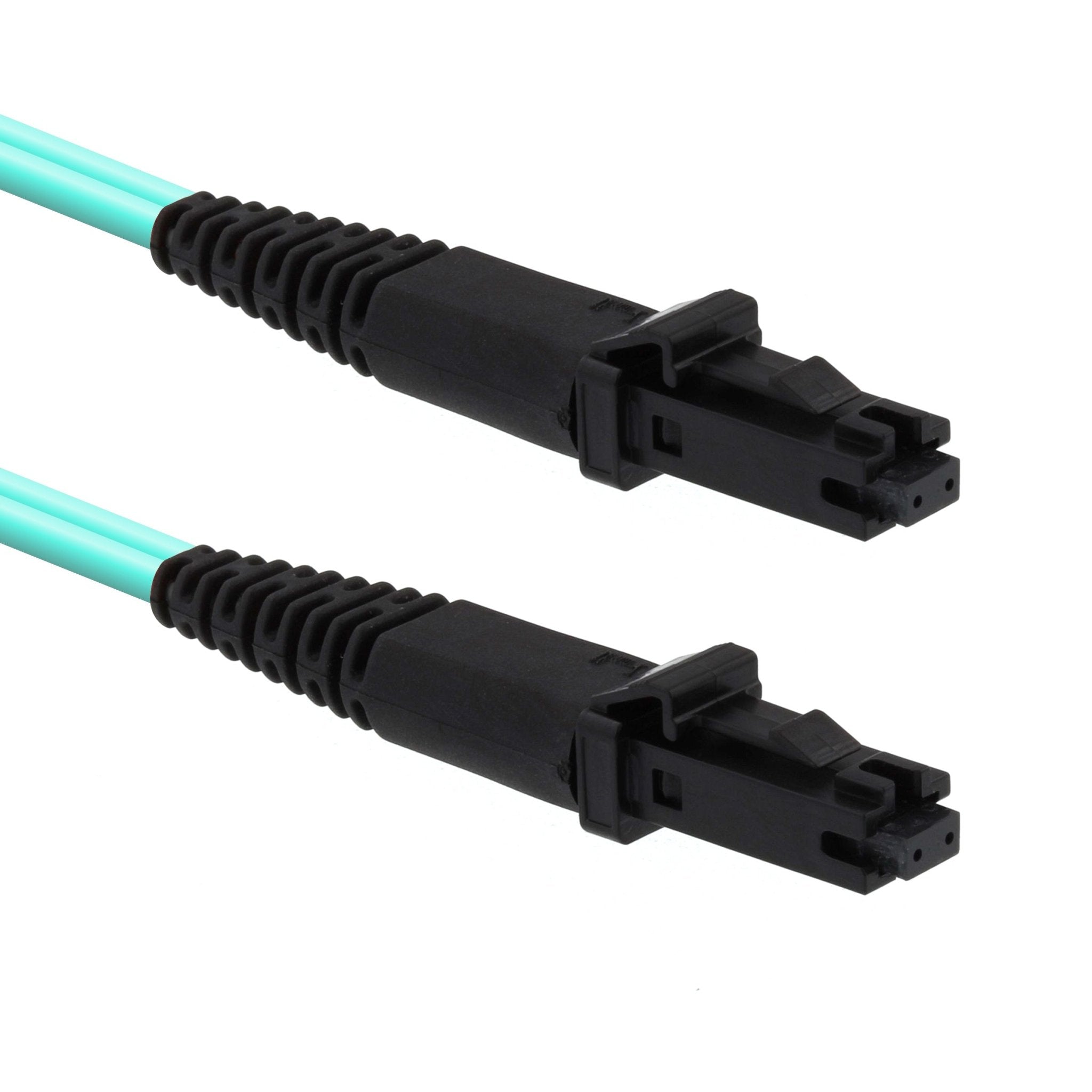
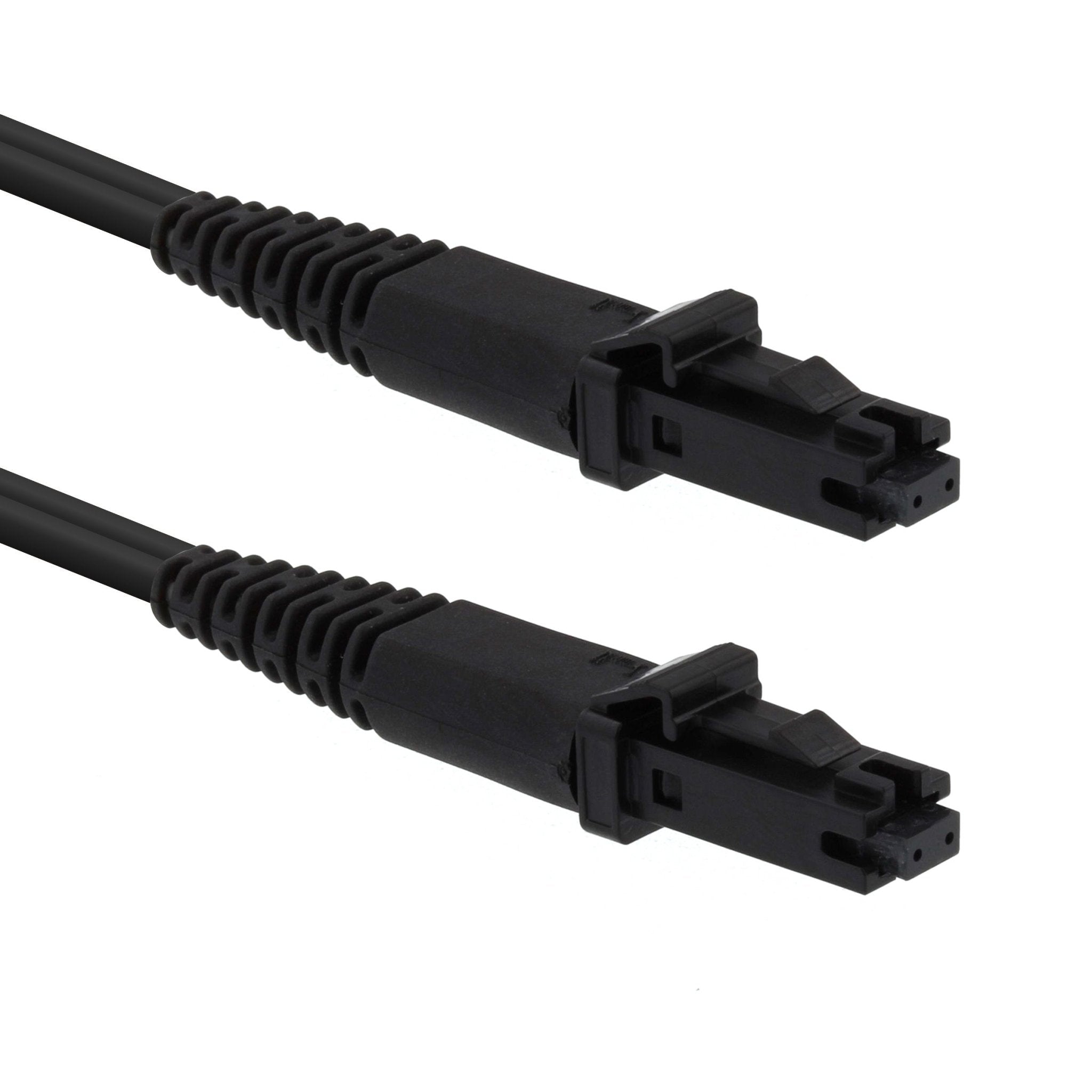
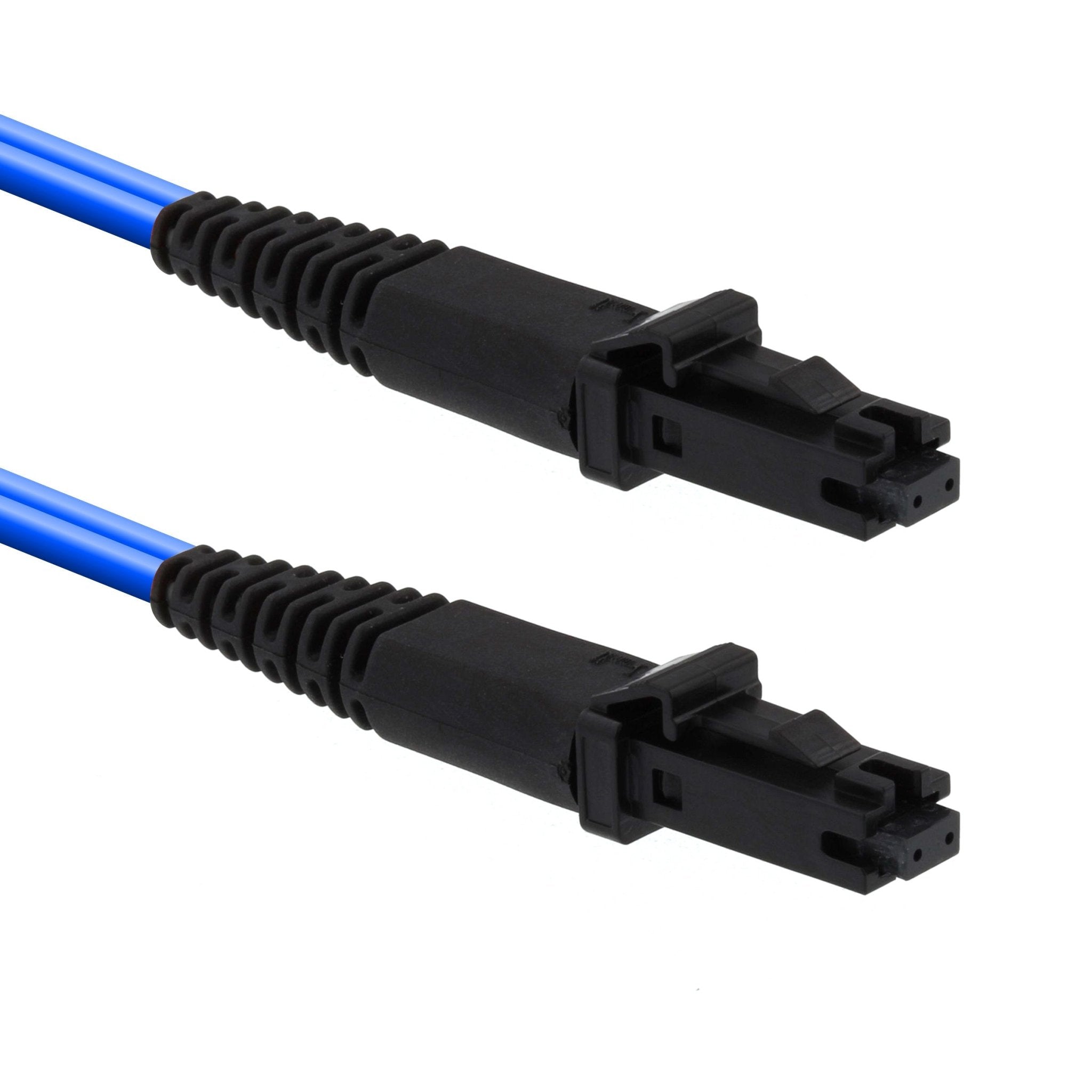
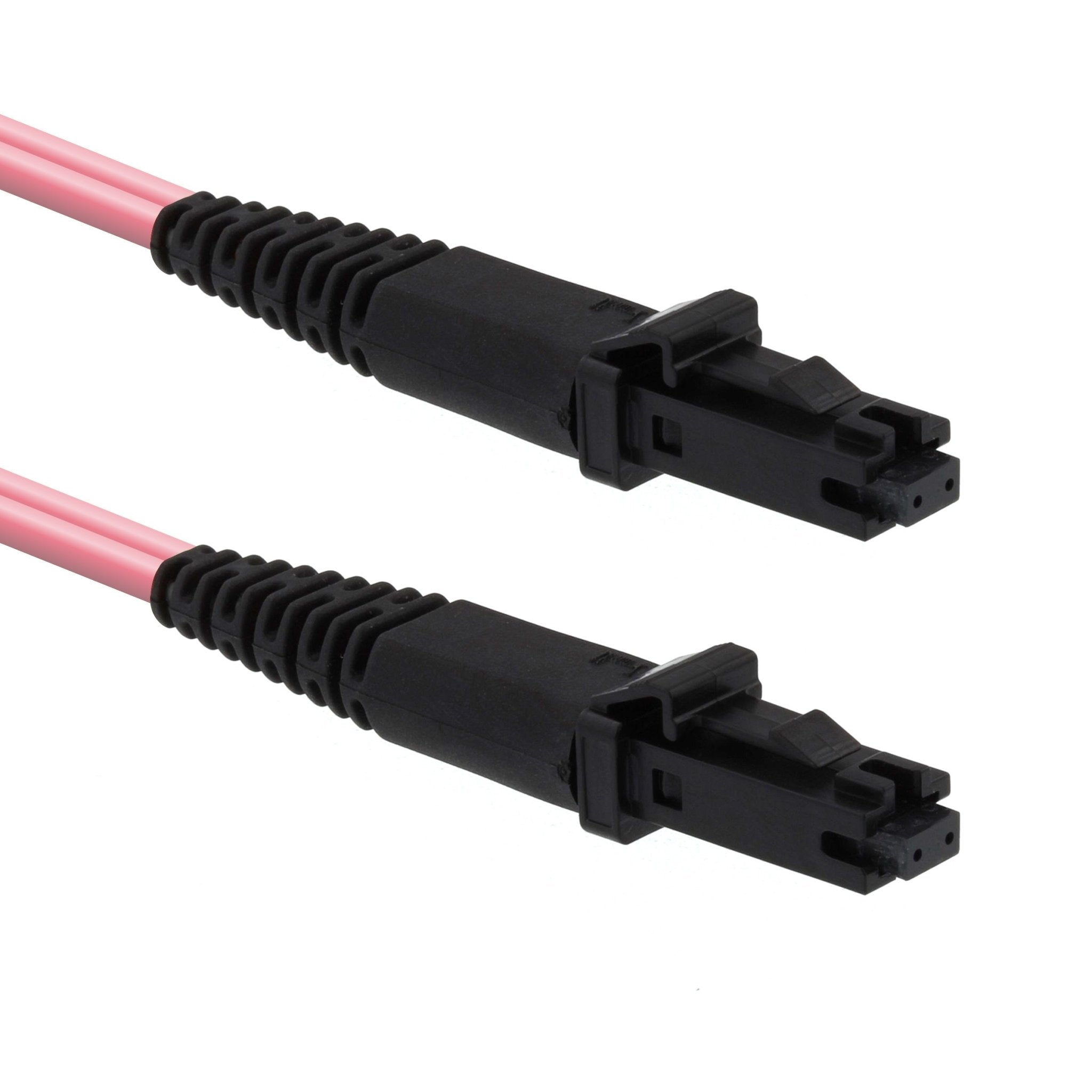
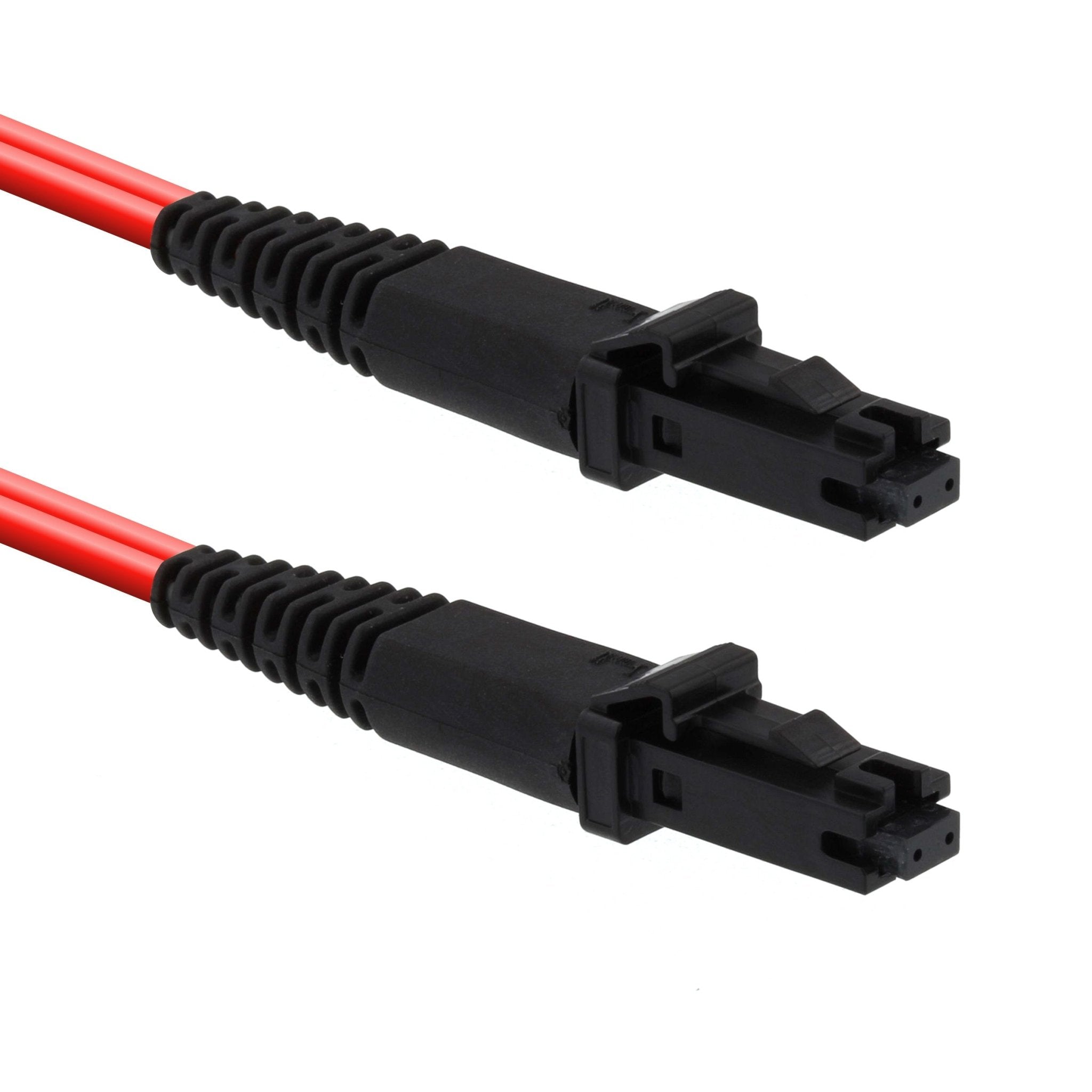
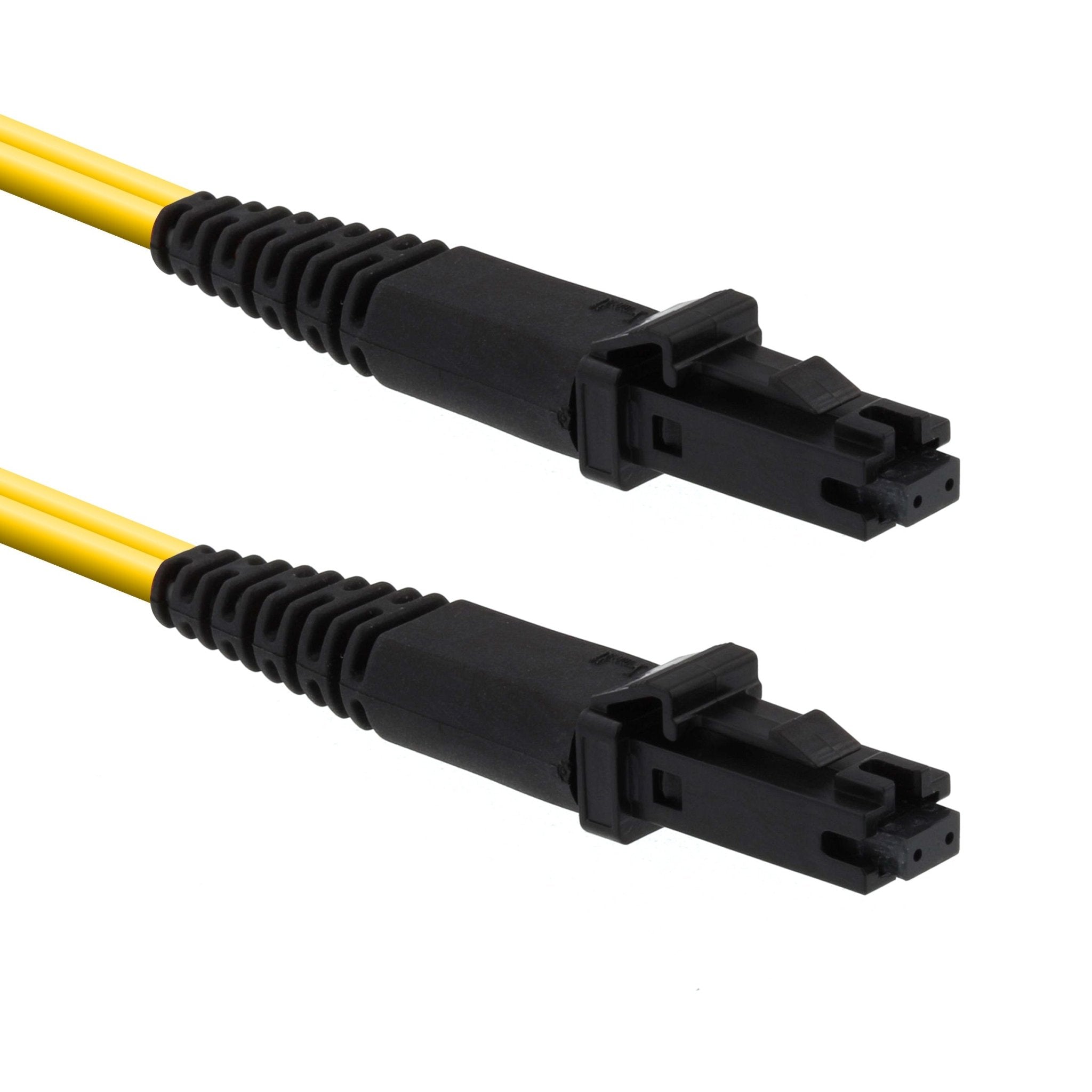
Overview
Core Specifications & Benefits:
- High Bandwidth Performance: Optimized for high-speed data transmission in data centers and LANs.
- Seamless Integration: Compatible with multimode transceivers and equipment.
- Reliable & Robust: Durable construction for long-term performance.
- Precision Engineered: Accurate geometrical parameters minimize splicing loss and maximize efficiency.
- Multimode OM4 Fibre: 50µm core, 125µm cladding.
- LSZH Jacket: Low Smoke Zero Halogen.
- Ferrule Housing: Zirconia Ceramic.
Standards Compliance:
- ITU-T G.651.1
- IEC 60793-2-10 A1
- IEC 11801-1
- IEC 61304: Low Smoke
- IEC 60754: Halogen & Corrosion Free
- IEC 60332: Flame Retardant
- TIA-492AAAF
- Telcordia GR-326-CORE
- RCM Compliance (SDoC)
Optical Performance:
-
Attenuation:
- 850nm: ≤ 2.4 dB/km
- 1300nm: ≤ 0.6 dB/km
-
Overfilled Modal Bandwidth:
- 850nm: ≥ 3500 MHz·km
- 1300nm: ≥ 500 MHz·km
-
Effective Modal Bandwidth (EMB):
- 850nm: ≥ 4700 MHz·km
-
Application Support Distance:
- 40GBASE-SR4 / 100GBASE-SR10: 170m
- 10GBASE-SR: 550m
- 1000BASE-SR: 1100m
- Numerical Aperture: 0.200 ± 0.015
-
Group Refractive Index:
- 850nm: 1.482
- 1300nm: 1.477
- Zero Dispersion Wavelength (λ0): 1295-1340nm
-
Zero Dispersion Slope (S0):
- 1295nm ≤ λ0 ≤ 1310nm: ≤ 0.105 ps/(nm²·km)
- 1310nm ≤ λ0 ≤ 1340nm: ≤ 0.000375(1590-λ0) ps/(nm²·km)
-
Macrobending Loss:
- 2 Turns @ 15 mm Radius: 850nm ≤ 0.1 dB, 1300nm ≤ 0.3 dB
- 2 Turns @ 7.5 mm Radius: 850nm ≤ 0.2 dB, 1300nm ≤ 0.5 dB
- Backscatter Characteristics: 1300nm Step ≤ 0.10 dB
- Irregularities Over Fibre Length and Point Discontinuity: ≤ 0.10 dB
- Attenuation Uniformity: ≤ 0.08 dB/km
- Insertion Loss: ≤ 0.3 dB
- Optical Return Loss: UPC MM: > 20 dB
- Repeatability: ≤ 0.2 dB
- Changeability: ≤ 0.1 dB
Geometrical Characteristics:
- Core Diameter: 50 ± 2.5μm
- Core Non-Circularity: ≤5.0%
- Cladding Diameter: 125.0 ± 1.0μm
- Cladding Non-Circularity: ≤0.6%
- Coating Diameter: 245 ± 7μm
- Coating/Cladding Concentricity Error: ≤10.0μm
- Coating Non-Circularity: ≤6.0%
-
Core/Cladding Concentricity Error: ≤1.0μm
Environmental & Mechanical:
- Operating/Storage Temperature: -40°C to 80°C
- Environmental Stability: Attenuation variation ≤ 0.10 dB/km under temperature, humidity, and immersion conditions.
- Minimum Bend Radius: 35mm
- Proof Test: ≥ 9.0 N, ≥ 1.0%, ≥ 100 kpsi
- Macro-bend Loss: ≤ 0.05 dB
- Coating Strip Force: 1.5 N (typical), ≥ 1.3 (min), ≤ 8.9 N (max)
- Dynamic Fatigue Parameter: 20