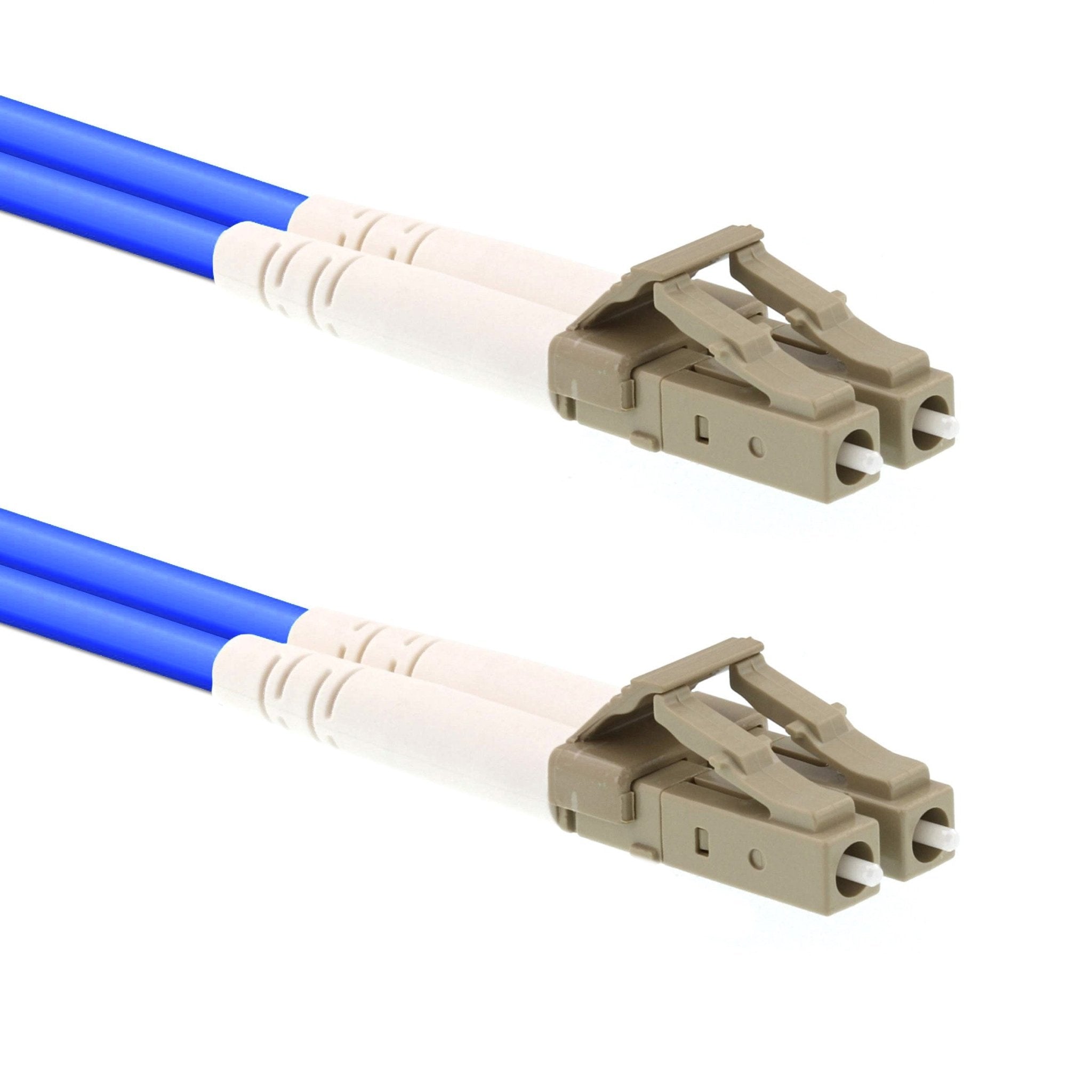
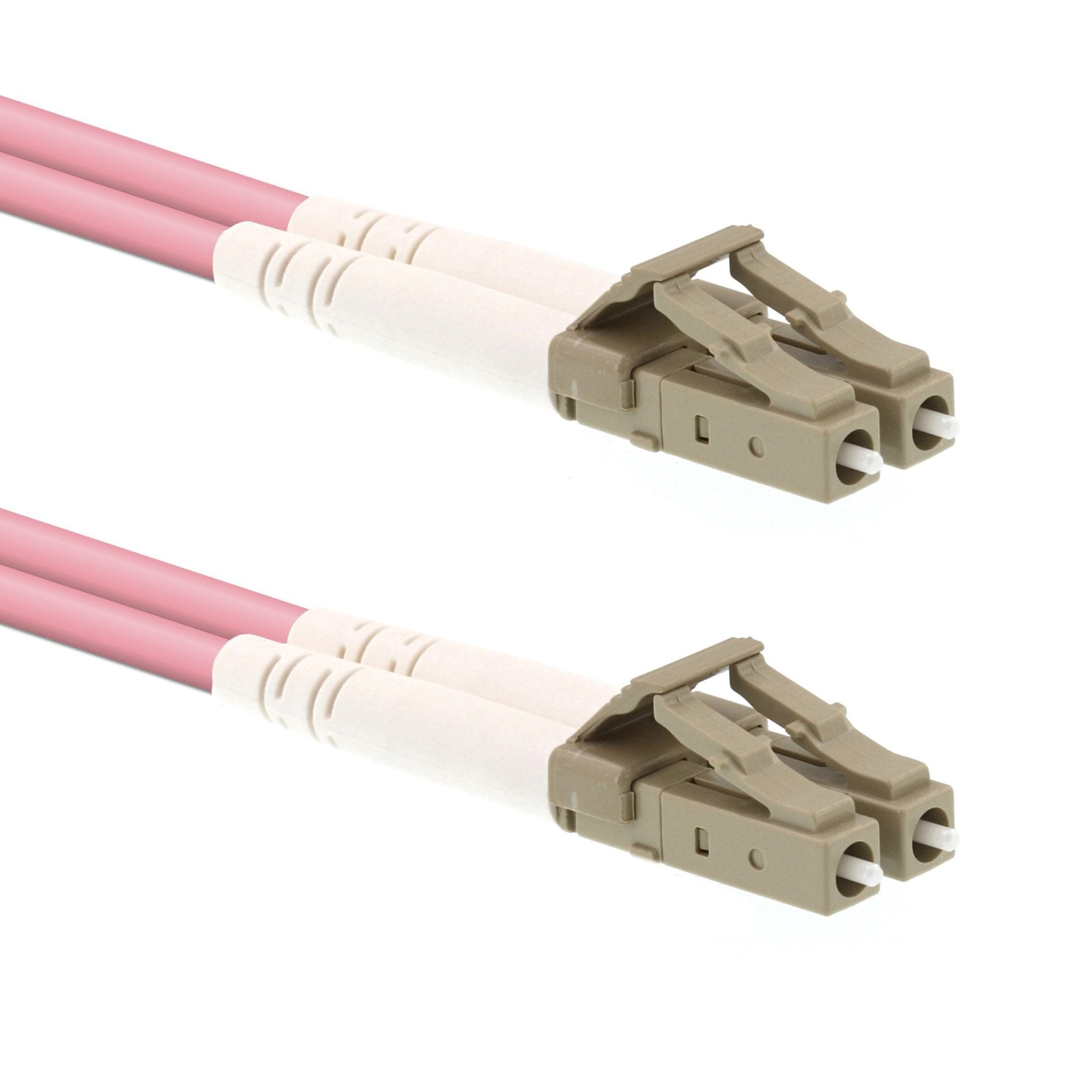
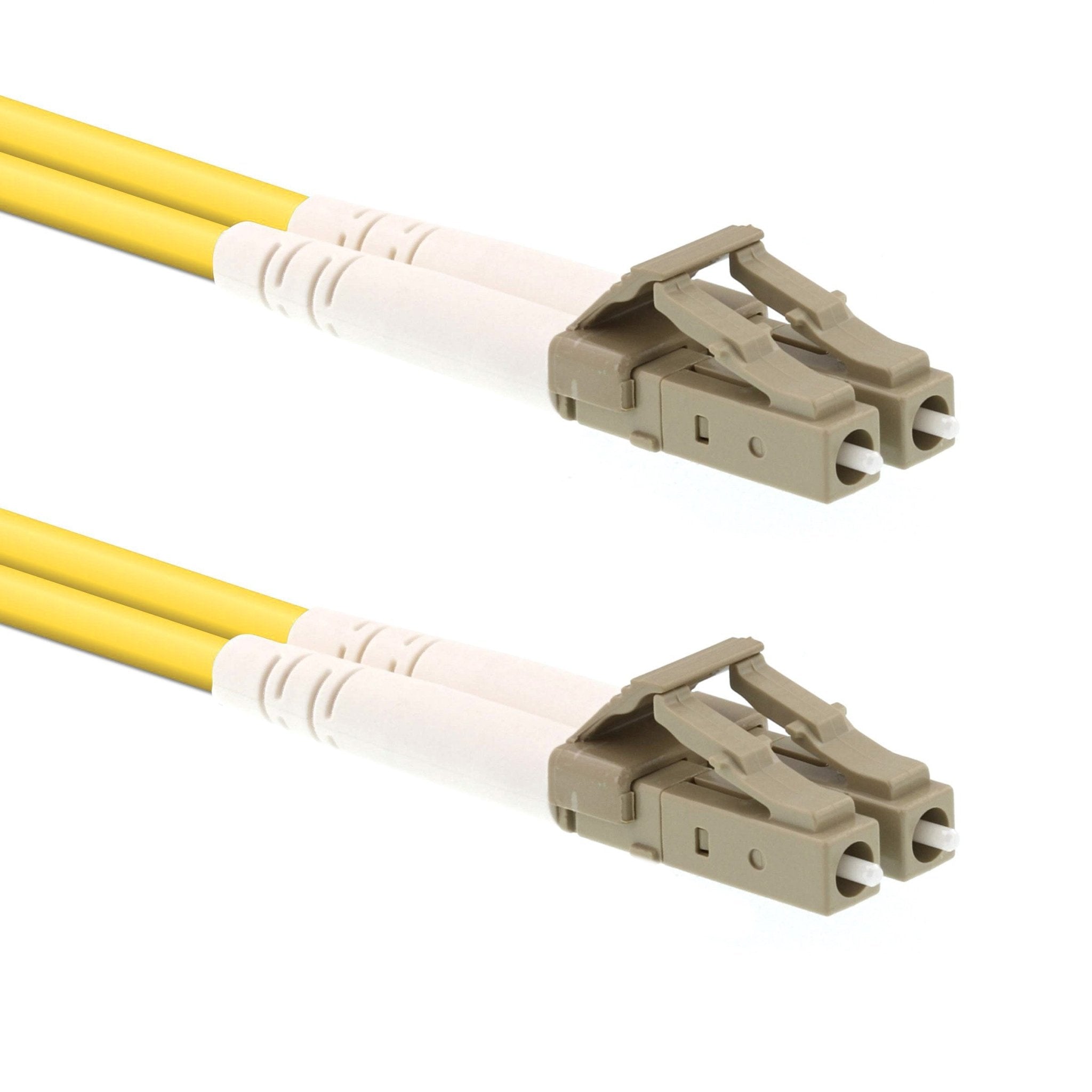
Overview

Core Specifications & Benefits:

  • Designed for legacy multimode applications.
  • Supports data transmission over moderate distances.
  • Reliable performance for established network infrastructures.
  • Multimode OM1 Fibre: 62µm Core, 125µm Cladding.
  • LSZH Jacket: Low Smoke Zero Halogen.
  • Ferrule Housing: Zirconia Ceramic.

Standards Compliance:

  • IEC 11801-1
  • IEC 60793-2-10 A1
  • IEC 61304: Low Smoke
  • IEC 60754: Halogen & Corrosion Free
  • IEC 60332: Flame Retardant
  • TIA-492AAAF A1
  • Telcordia GR-326-CORE
  • RCM Compliance (SDoC)

Optical Characteristics:

  • Attenuation:
    • 850nm: ≤ 2.7 dB/km
    • 1300nm: ≤ 0.6 dB/km
  • Overfilled Modal Bandwidth:
    • 850nm: ≥ 200 MHz·km
    • 1300nm: ≥ 500 MHz·km
  • Numerical Aperture: 0.275 ± 0.015
  • Group Refractive Index:
    • 850nm: 1.496
    • 1300nm: 1.491
  • Zero Dispersion Wavelength (λ0): 1320-1365 nm
  • Zero Dispersion Slope (S0):
    • 1320nm ≤ λ0 ≤ 1348nm: ≤ 0.11 ps/(nm²·km)
    • 1348nm ≤ λ0 ≤ 1365nm: ≤ 0.001(1458-λ0) ps/(nm²·km)
  • Macrobending Loss (100 Turns @ 37.5 mm Radius):
    • 850nm: ≤ 0.50 dB
    • 1300nm: ≤ 0.50 dB
  • Backscatter Characteristics (1300nm Step): ≤ 0.10 dB
  • Irregularities Over Fibre Length and Point Discontinuity: ≤ 0.10 dB
  • Attenuation Uniformity: ≤ 0.10 dB/km
  • Insertion Loss: ≤ 0.3 dB
  • Optical Return Loss: UPC MM: > 20 dB
  • Repeatability: ≤ 0.2 dB
  • Changeability: ≤ 0.1 dB

Geometry Characteristics:

  • Core Diameter: 62.5 ± 2.5μm
  • Core Non-Circularity: ≤ 5.0%
  • Cladding Diameter: 125.0 ± 1.0μm
  • Cladding Non-Circularity: ≤ 1.0%
  • Coating Diameter: 245 ± 7μm
  • Coating/Cladding Concentricity Error: ≤ 10.0μm
  • Coating Non-Circularity: ≤ 6.0%
  • Core/Cladding Concentricity Error: ≤ 1.5μm

Environmental & Mechanical:

  • Operating/Storage Temperature: -40°C to 80°C
  • Environmental Stability: Attenuation variation ≤0.10dB/km under temperature, humidity, and immersion conditions.
  • Minimum Bend Radius: 35mm
  • Proof Test: ≥ 9.0 N, ≥ 1.0%, ≥ 100 kpsi
  • Macro-bend Loss: ≤ 0.05 dB
  • Coating Strip Force: 1.5 N (typical), ≥ 1.3 N (min) / ≤ 8.9 N (max)
  • Dynamic Fatigue Parameter: 20
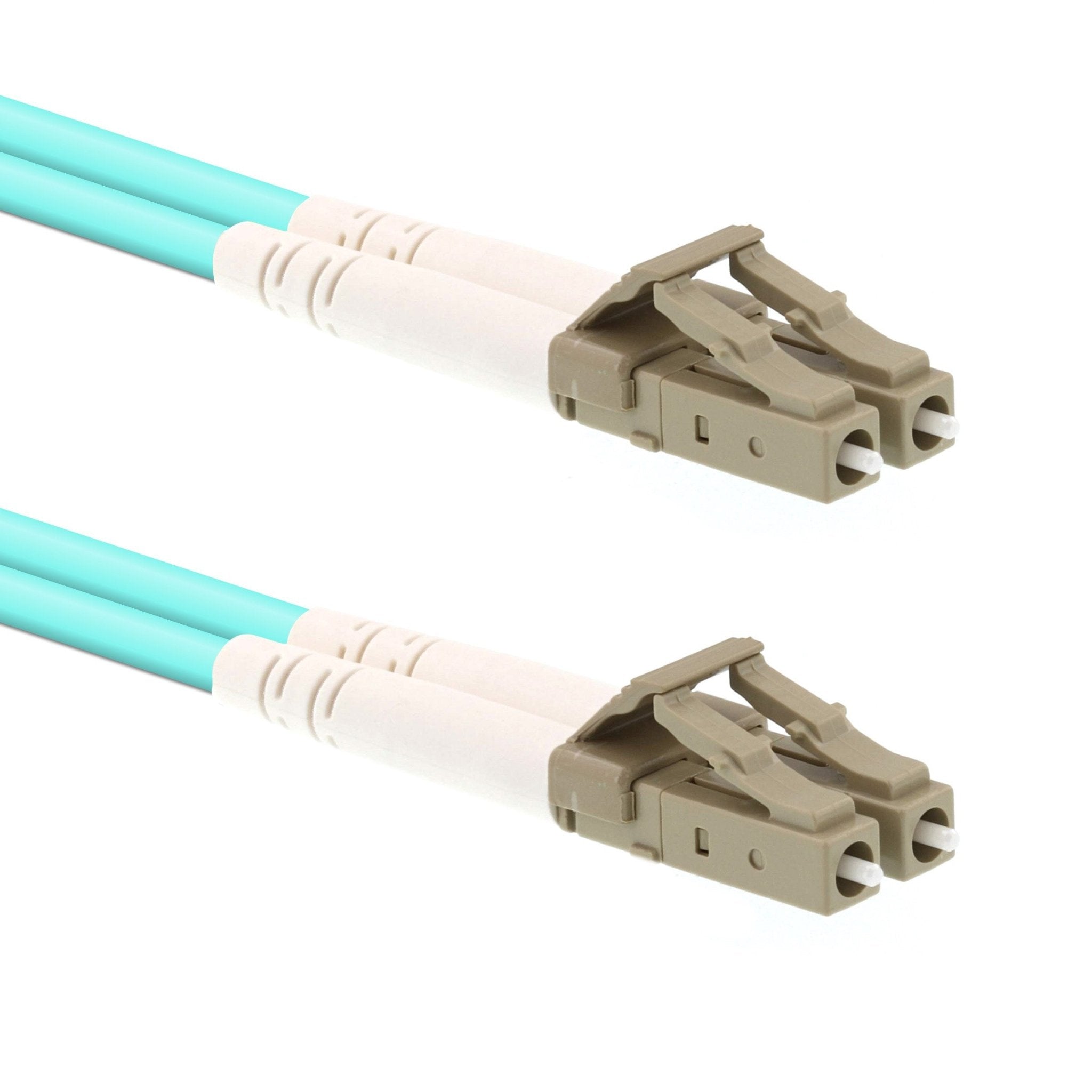
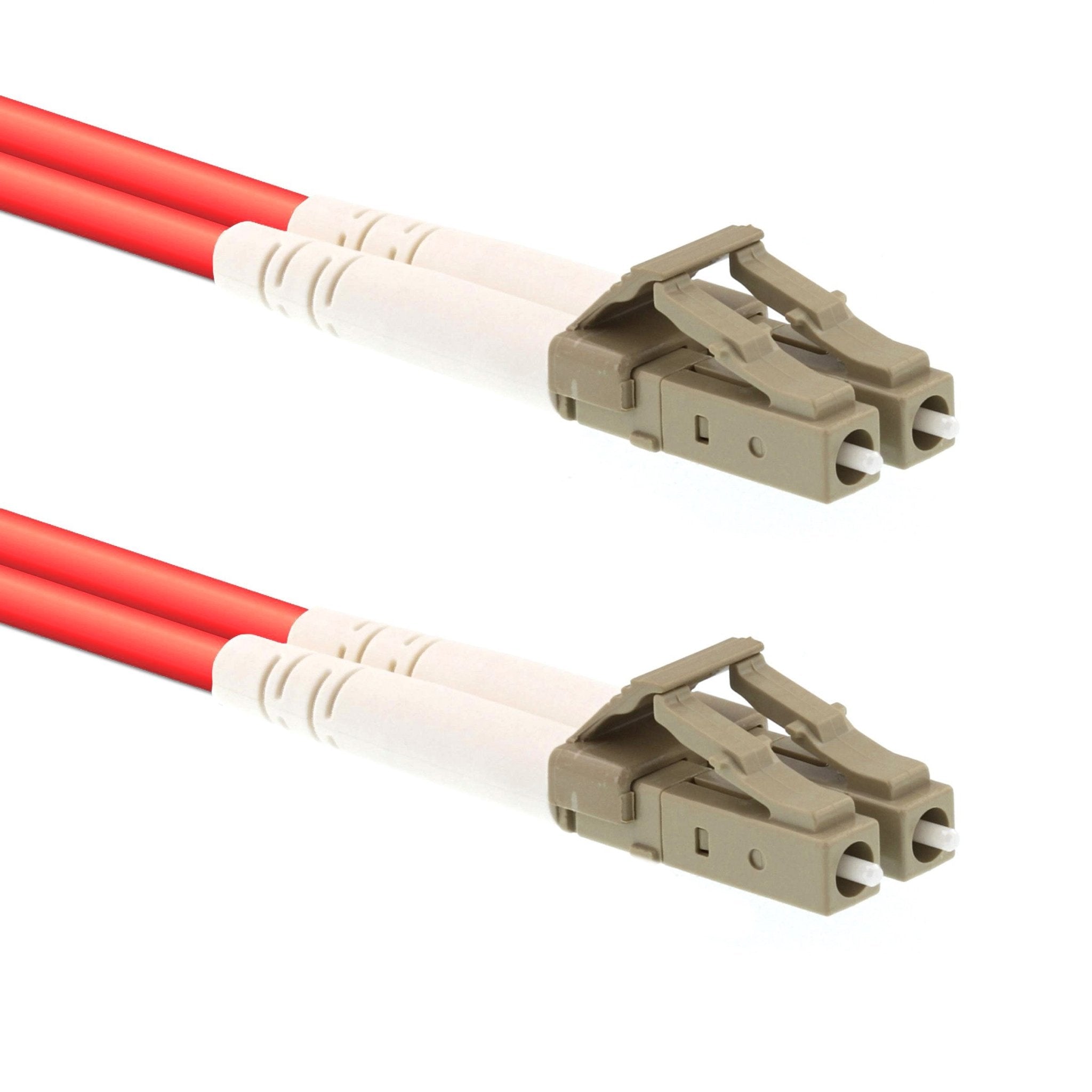
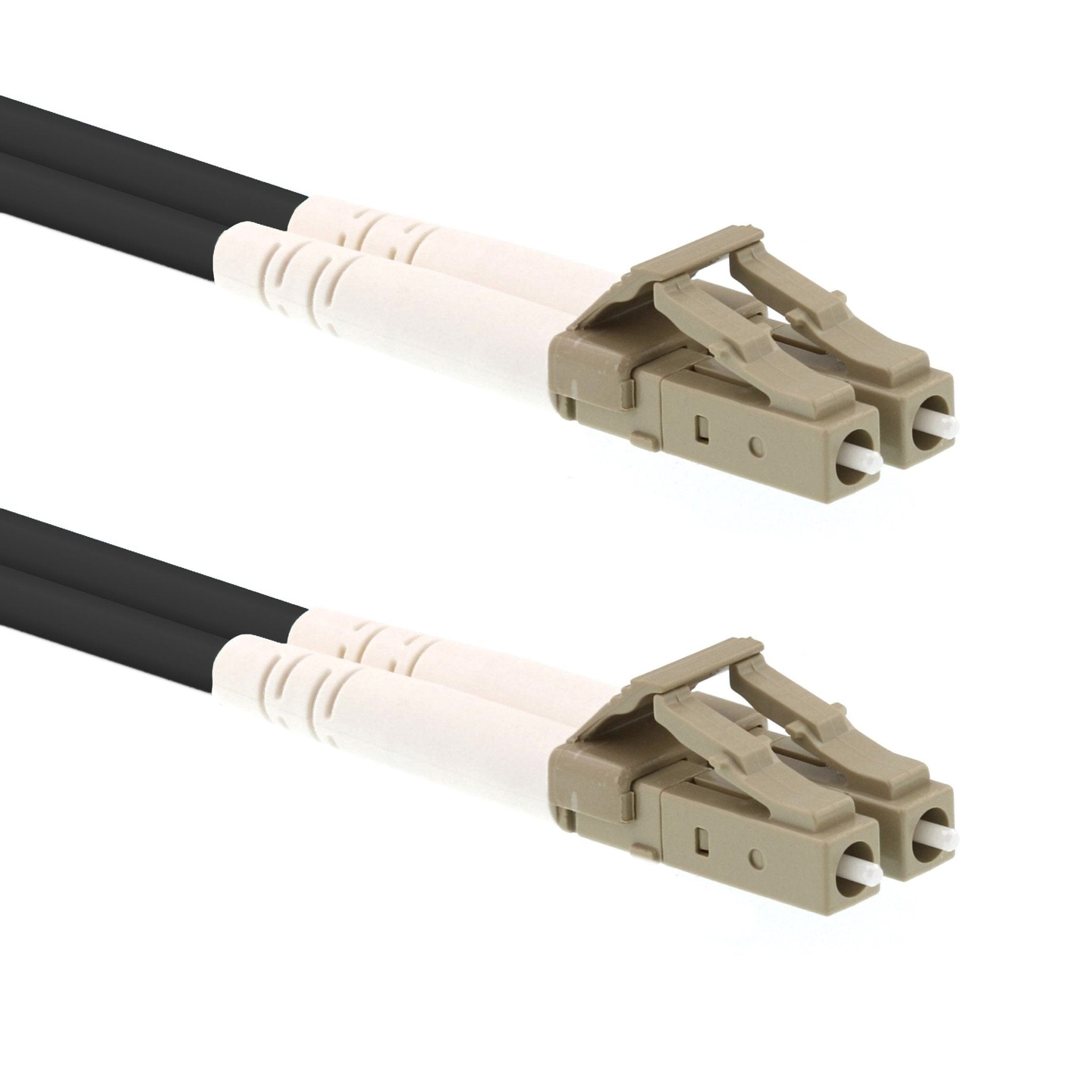
CCD LC - LC Multimode OM1 Duplex Fibre Optic Patch Cable - CCD Networking
How long does shipping take?

Orders can take 3-14 business days to arrive, depending on stock levels and your location.

What is a Media Converter?

A media converter is a networking device that converts one type of network media, such as copper network cabling, to another, such as fibre optic network cabling. This is often used to extend network distances or connect different network types.

What is the difference between Single-Mode and Multi-Mode?

Single-mode fibre uses a thin core to guide light in a single path, enabling long-distance, high-bandwidth transmissions. Multi-mode fibre, on the other hand, has a thicker core that allows multiple light paths to travel simultaneously. While this can increase bandwidth over shorter distances, it can also lead to signal distortion due to the different light paths arriving at different times. This makes multi-mode fibre more suitable for shorter-distance applications, while single-mode fibre is better suited for longer-distance transmissions.

What is an SFP Module?

An SFP module is a small, hot-swappable device that plugs into media converters, switches, network cards, and routers. It provides various connectivity options, such as fibre optic or copper connectors.

What is the difference between Duplex and Simplex?

Simplex Fiber: A single-lane road. Usually, data only travels one way, but "Bi-Di" technology allows two-way traffic on that one lane by using two different colors of light.

Duplex Fiber: A two-lane road. Data travels both ways at once because there are two separate strands of glass—one for sending and one for receiving.

What is PoE (Power Over Ethernet)?

PoE technology transmits electrical power along with data signals over Ethernet cables, eliminating the need for separate power outlets and simplifying network installations, especially for devices like IP cameras and VoIP phones.

What is the difference between Ethernet (Cat) cables?

Ethernet categories (Cat5e, Cat6, Cat6a, etc.) define the speed and frequency the cable can handle. As the number increases, so does the performance.

Need Help?